
(Update: for the latest on ROOT, go to thestarfish.org/root)
You get 27 multidisciplinary artists, strategists, funders, lawyers, and technologists in one room—what happens next?
Well, after we convened a two-day gathering at the Doris Duke Foundation as one of the first steps supported by ROOT's new funding, we have a few more answers. And, perhaps more importantly, a few better questions.
The Starfish Foundation convened a group of multi-hyphenate thinkers to help shape the use case and future direction of ROOT: an open-source infrastructure designed to help artists access funding directly, share revenue more equitably, and cultivate deeper relationships with their communities.
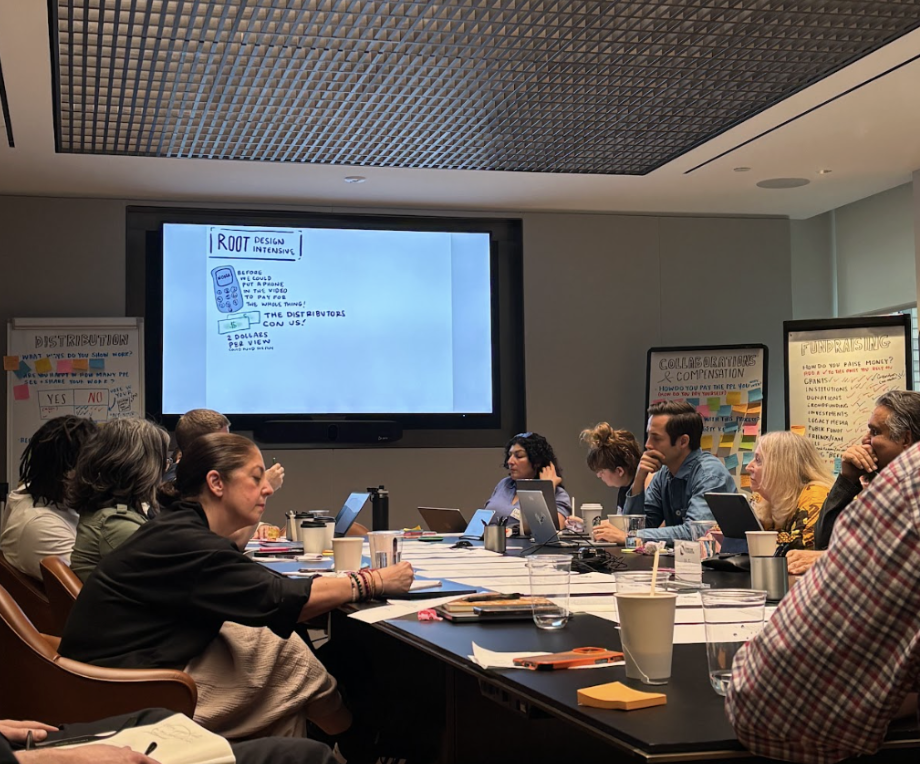
The room was stacked. Dancers, performers, musicians, writers, filmmakers, lawyers, producers, funders, nonprofit leaders, strategists, product developers, and technologists—all bringing different expertise but a shared commitment to artist sustainability.
Because let's be honest: being an artist right now is increasingly difficult. Institutions are shifting. Traditional funding pathways are eroding. Market pressures continue to squeeze creative livelihoods. We gathered around a simple premise: if the current systems aren't serving artists, what might a better one look like?
We began the first day with a hypothesis, not a solution.
After introductions and community agreements, we explored how participants currently navigate collaboration, fundraising, distribution, and audience engagement. What tools are they using? What's working? Where are the pressure points?
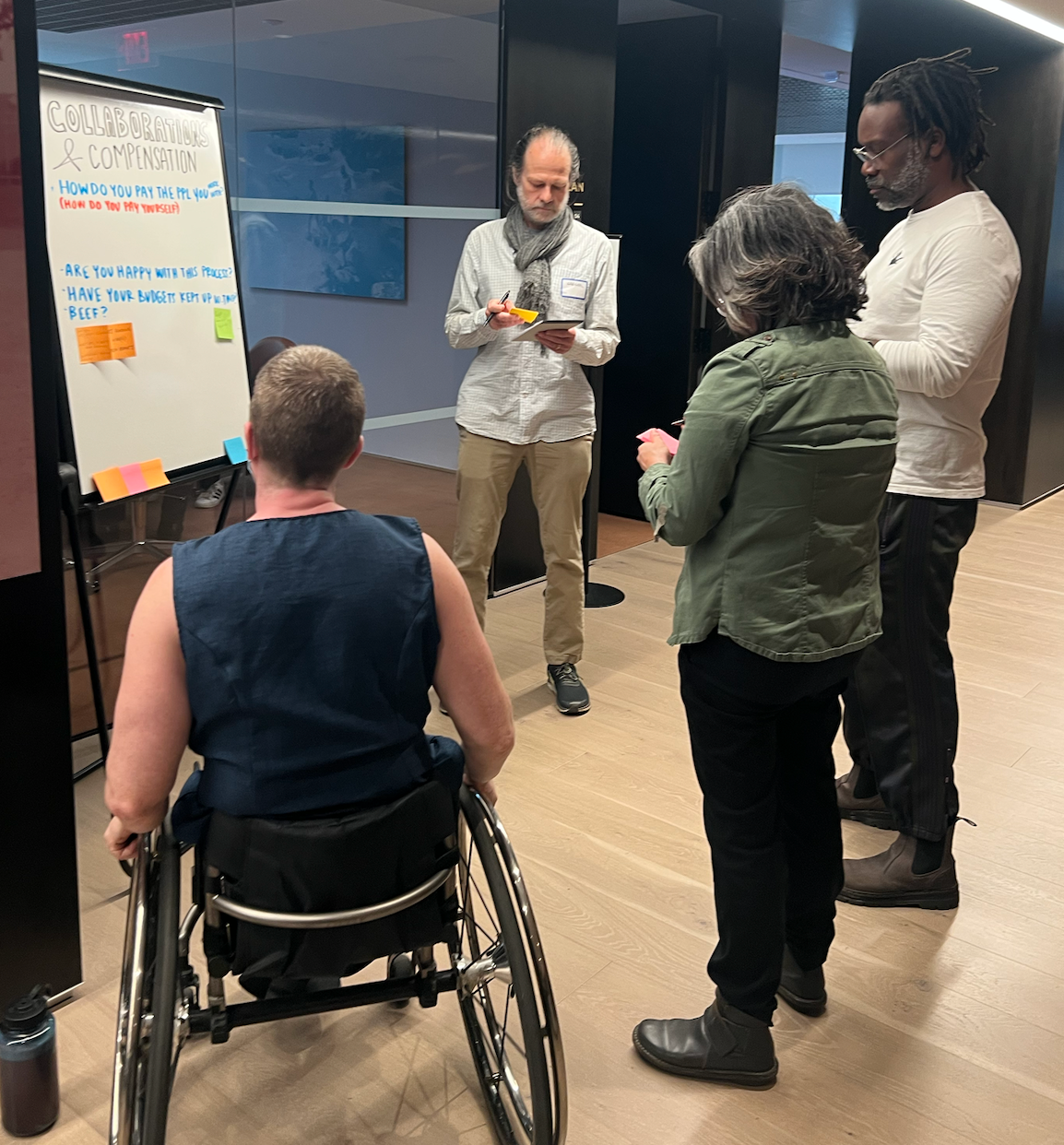
From there, we introduced the use case that sparked ROOT in the first place: filmmaker Mahyad Tousi's upcoming project, CURA. Our technologist partner, Brendan O'Brien of N0, walked through the current proposed process flow. Then, each artist was paired with a strategist and asked to imagine how ROOT might support their own work—including an original theater production, a music project, a film, and more. Together, they mapped possibilities, identified gaps, and stress-tested assumptions. As often happens with early ideas, some parts of ROOT resonated immediately and others generated confusion. That friction turned out to be productive.
Throughout the day, our recorded confessional booth remained open. Artists and strategists reflected on the realities of making work in 2026. One participant performed a slow-motion piece, gradually collapsing to the floor, as though choking on invisible forces. The performance landed: Things are not great for artists right now.
As conversations deepened, we shifted from present-day frustrations to future possibilities.
Imagine you're an artist in 2031. How did ROOT help you reach your community? How did it help sustain your practice? What became possible that isn't possible now?
By the end of the day, another concept emerged: the flotilla.
What if ROOT didn't just serve individual artists and their immediate collaborators? What if artists could support one another through shared audiences, shared knowledge, and shared infrastructure? What if community-building wasn't a solitary endeavor but a collective one?
We started the day with questions and ended with even more. But we also left with new relationships, new collaborators, and a stronger sense of what might be worth building together.
The second day was about synthesis.
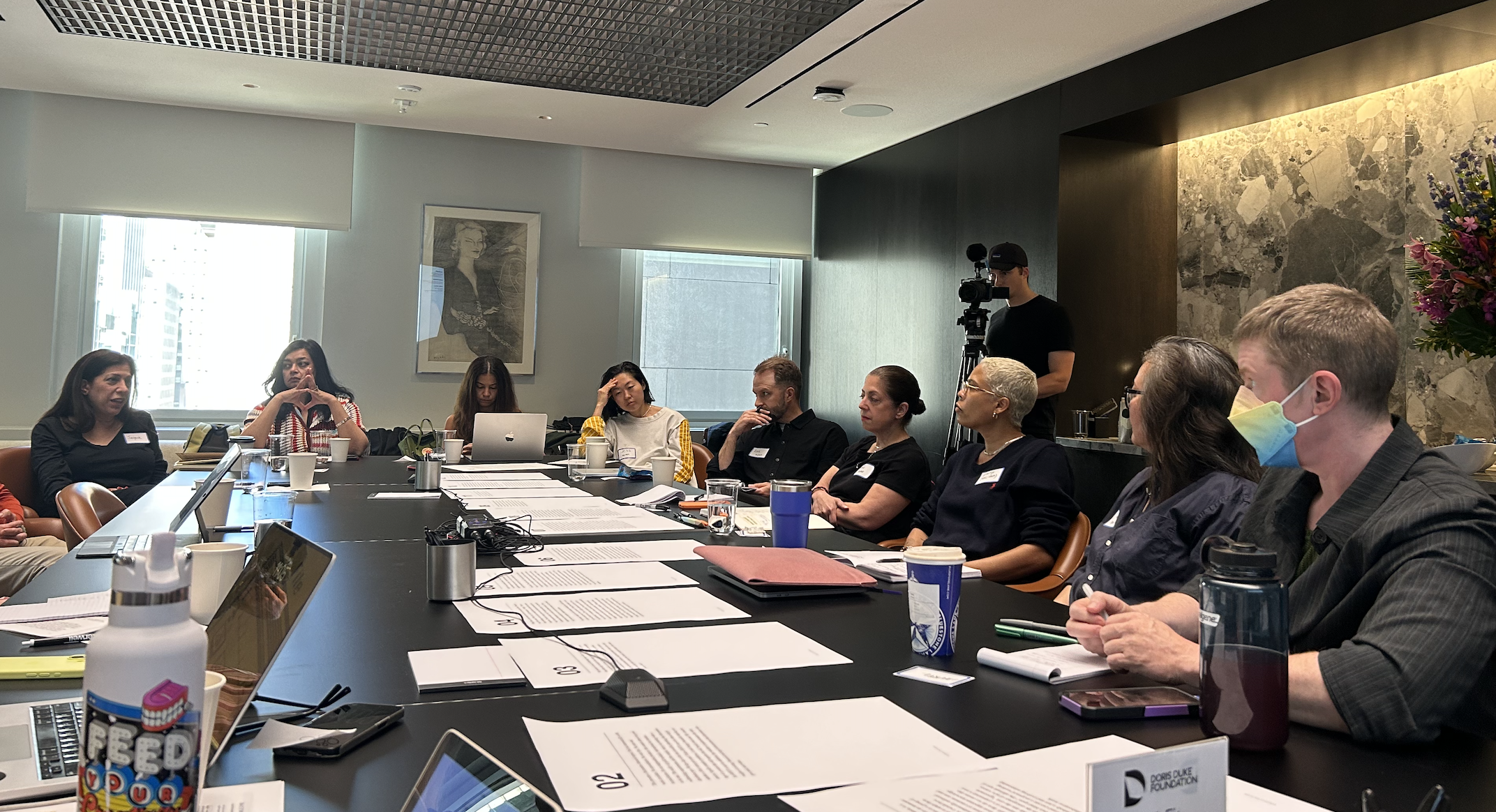
We kept artist needs at the center while bringing technologists, product thinkers, lawyers, and strategists into conversation about implementation. How do we make ROOT not only possible, but genuinely useful?
We had an agenda.
We blew past it.
The energy in the room was too strong. People wanted to build on what had surfaced the day before. They wanted to iterate. Expand. Imagine adjacent possibilities. At the same time, we were careful not to let product solutions outrun the reason for creating the product in the first place.
ROOT is not a technology project looking for users.
It's an artist-oriented approach to building infrastructure for collective sustainability.
As discussions evolved, larger questions surfaced:
How can artists move resources without unnecessary intermediaries controlling the flow?
How can revenue from a community be shared transparently with the collaborators who help make the work possible?
How can these systems remain open source, accessible, and artist-owned?
How can artists support one another through shared networks rather than competing for increasingly scarce attention?
Those conversations eventually translated into a phased roadmap for ROOT's development—beginning with payment and revenue-sharing systems and expanding outward from there.
We started somewhere. We arrived at clear next steps. And still, important questions remain:
What will make this valuable enough for artists to bring their communities into a new ecosystem?
What role will blockchain technology actually play—and where does it create more complexity than value?
How do we confirm the smart contracts used to share revenue work across global contexts?
Who is ROOT truly for?
These are not questions we expect to solve overnight. But they're the right questions to be asking.
We're excited to keep building, keep listening, and keep refining ROOT alongside the artists and communities it aims to serve.
Thank you for reading. For the latest on ROOT, including how to sign up, visit thestarfish.org/root.
